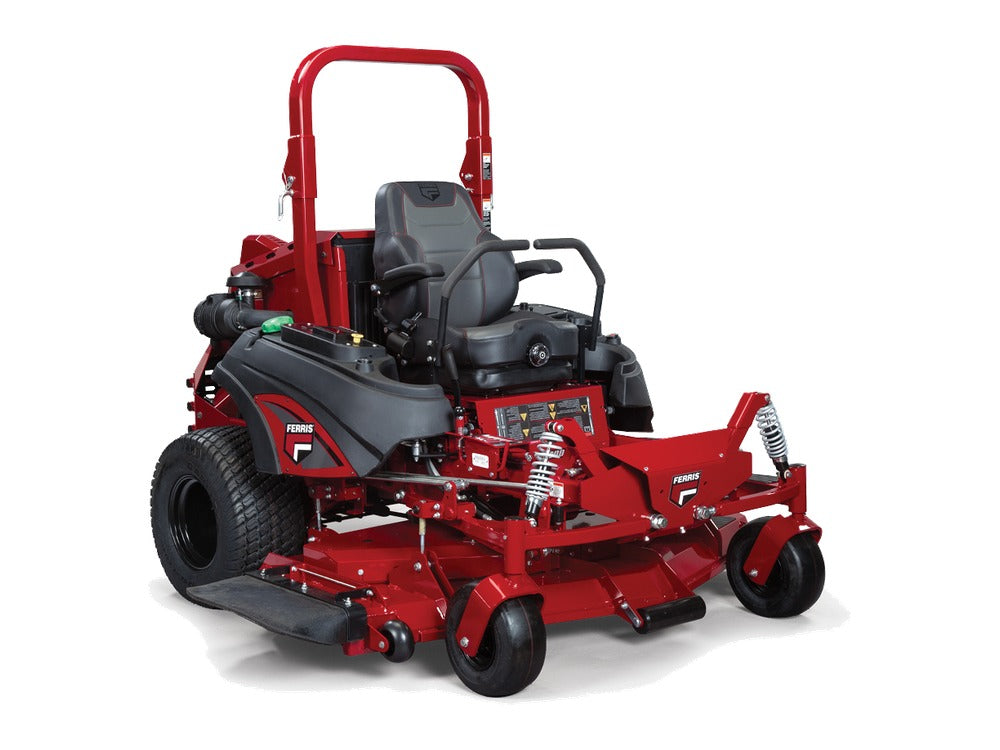
A commercial-grade zero-turn is a serious investment, and a few minutes of care goes a long way. Use this checklist alongside your operator's manual. The manual's intervals always come first.
Before every mow
- Engine oil level. Check on level ground with the engine cool.
- Tire pressure. Uneven pressure is a common cause of an uneven cut and of a mower that pulls to one side.
- Clear debris. Blow grass and leaves off the engine, the cooling screens and around the hydraulic drive units. Heat is the enemy of engines and transmissions.
- Look at the blades. Check for chips, bends and loose blade bolts.
- Test the safety switches. The engine should not start with the drive levers out of neutral or the blades engaged, and it should shut off if you leave the seat with the blades on.
Every few weeks (or every 25–50 hours)
- Sharpen or replace blades. Dull blades tear grass instead of cutting it, which leaves ragged, brown tips and makes the engine work harder. Balance blades after sharpening.
- Air filter. Inspect and clean or replace it. In dry, dusty conditions this needs doing much more often.
- Grease points. Grease spindles, caster pivots and other fittings as your manual specifies.
- Belts. Look for cracking, glazing or fraying on the deck and drive belts.
- Clean under the deck. Caked grass hurts airflow and cut quality and traps moisture that causes rust.
By the hour meter
- Oil and filter changes at the engine manufacturer's interval, and often an earlier first change on a new engine after break-in.
- Fuel filter replacement as specified.
- Hydraulic drive service. Zero-turns steer and drive through hydrostatic transmissions. Check the fluid and change filters and fluid on schedule. Whining, slow response or loss of power on hills are signs to have them checked.
- Suspension. If your mower has a suspension system, as many Ferris models do, inspect shocks, springs and pivot points for wear.
End of season storage
- Clean the mower thoroughly, deck included.
- Add fuel stabilizer and run the engine a few minutes, or follow your manual's storage steps for the fuel system.
- Change the oil, so used oil does not sit in the engine all winter.
- Charge the battery and keep it on a maintainer, or remove it and store it somewhere it will not freeze.
- Store the mower covered and dry, with tires properly inflated.
When to bring it in
New vibration, an uneven or streaky cut that sharp blades do not fix, a mower that will not track straight, hard starting, or smoke are all signs something needs attention. Catching them early is almost always cheaper.
Want it done for you? Book a service with our shop, or browse mowers in stock if it is time for an upgrade.