The most common question we hear from first-time buyers is simple: how big a tractor do I need? The honest answer is that it depends less on your acreage than on the jobs you want the tractor to do. Here is how to think it through.
The three size classes
Sub-compact (roughly 20–25 hp)
Small, nimble and easy to store in a standard garage. Sub-compacts handle mowing with a belly mower, light loader work, spreading mulch, grading a driveway and moving snow.
A good fit if: you have a few acres, mostly maintain what is already there, and value maneuverability over pulling power.
Compact (roughly 25–60 hp)
The workhorse of small farms and ranchettes. Compact tractors run full-size implements such as rotary cutters, box blades, tillers and post-hole diggers, and they carry a front loader that can move real weight.
A good fit if: you are clearing brush, building fence, keeping pasture cut, or doing regular loader work around a property.
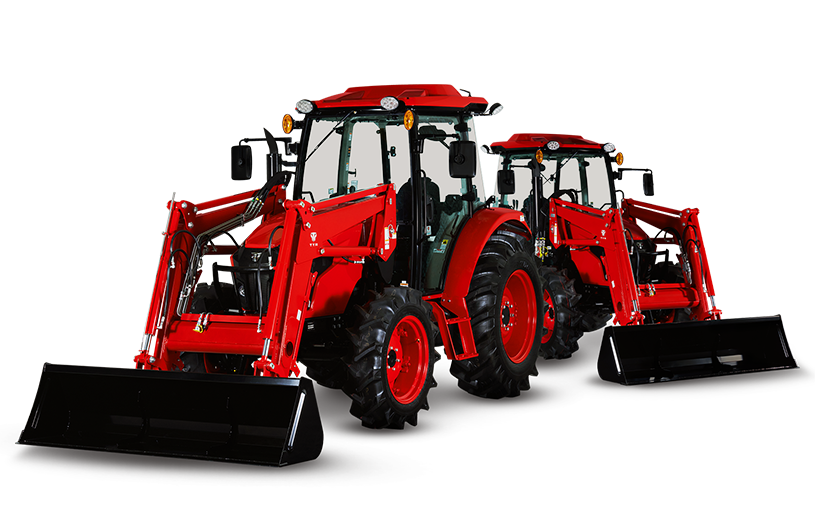
Utility (roughly 45–100+ hp)
Bigger frames, more hydraulic flow and more weight on the ground. Utility tractors pull wide implements, handle hay equipment and work long days on larger acreage, often with a cab.
A good fit if: you run livestock, put up hay, or need to cover a lot of ground quickly.
Start with the implement, not the tractor
Every implement has a minimum horsepower requirement, usually listed as PTO horsepower (the power actually delivered to the implement, which is lower than engine horsepower). List the implements you plan to run, find the largest requirement, and buy a tractor that clears it with some room to spare. Brush cutting in thick growth, heavy tillage and hills all eat into your margin.
Other things that matter as much as horsepower
- Transmission. A hydrostatic (HST) transmission works like an automatic, with a pedal for forward and reverse. It is ideal for loader work and mowing. Gear or shuttle transmissions are efficient for long, steady pulls.
- Four-wheel drive. If you plan to use a loader, or you have hills or mud, 4WD is worth it.
- Weight and ballast. A heavier tractor pulls better and carries loader loads more safely. Loader work always needs rear ballast: a ballast box, a rear implement or loaded tires.
- Hydraulics and hitch. Rear remotes, lift capacity and a Category 1 or 2 three-point hitch decide which implements you can run.
- Where it lives and how it travels. Measure your barn door and think about hauling. A tractor plus implements may need a bigger trailer than you expect.
Five questions to answer before you shop
- How many acres will you work, and what is the terrain like?
- What are the three jobs you will do most often?
- Which implements do you already own or plan to buy?
- Will you use a front loader regularly?
- Where will you store it, and will you need to trailer it?
Bring your answers and we will match you to the right machine. TYM builds tractors from sub-compact through utility size. See our tractors in stock, pair one with a trailer to haul it, or send us a message with your questions.