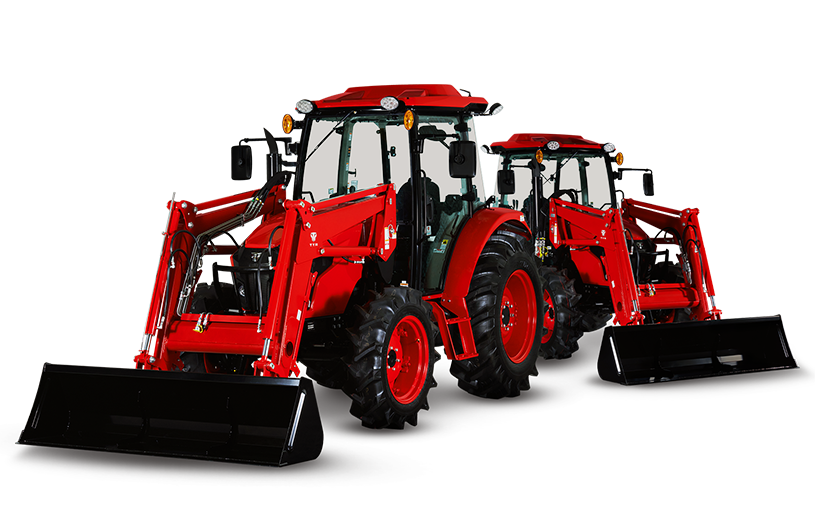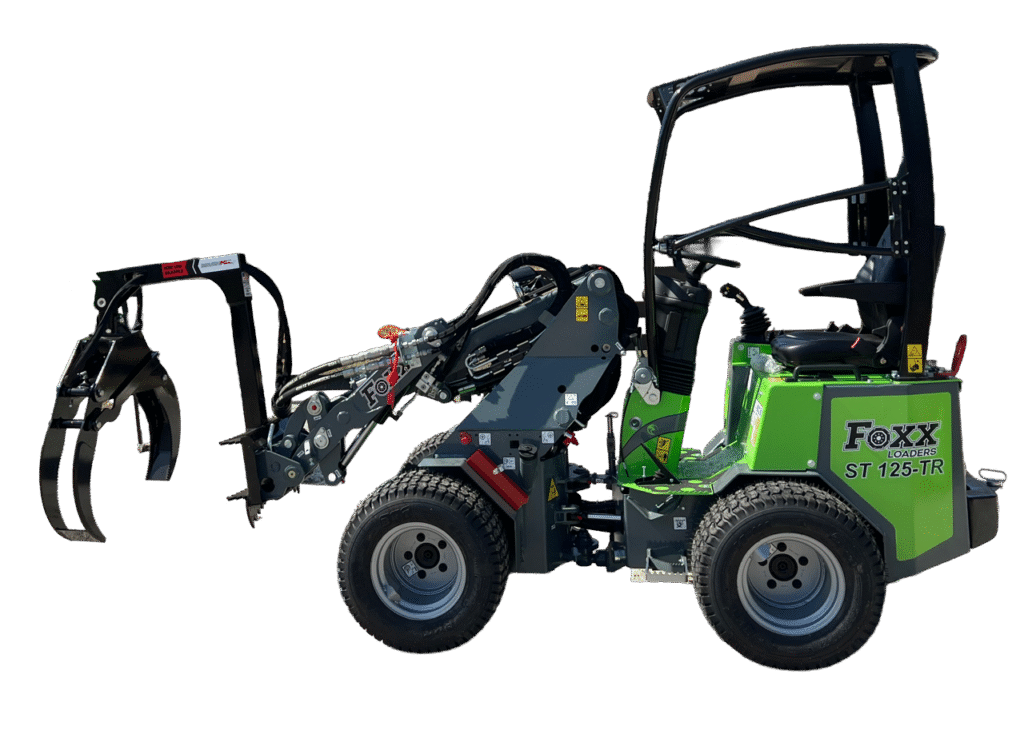
The loader is the hardest-working part of most tractors. It lifts, pushes, digs and carries every day, all on hydraulic pressure. Keep the hydraulics healthy and the pivot points greased, and a loader will give you years of trouble-free work. These are the basics. Your operator's manual has the exact intervals and fluids for your machine.
Daily checks (before you start)
- Hydraulic fluid level. Check with the loader lowered and the machine on level ground. Top up only with the fluid your manual specifies; on many tractors the transmission and hydraulics share the same fluid.
- Grease the pivots. Loader arm, bucket and cylinder pins take a beating. Many manufacturers call for grease every 8–10 hours of use. Pump until fresh grease pushes out the old.
- Hoses and fittings. Look for wet spots, cracking, abrasion and kinks. Make sure hoses are not rubbing where the loader moves.
- Attachment latches. Confirm quick-attach pins or levers are fully engaged before lifting anything.
A safety warning about leaks
Never feel for a hydraulic leak with your hand. Fluid escaping from a pinhole under pressure can penetrate skin and cause a serious injury that needs immediate medical attention. Use a piece of cardboard to find leaks, and always lower the loader to the ground, shut off the engine and relieve system pressure before working on any hydraulic component.
What your loader is telling you
- Slow to lift: low fluid, a clogged hydraulic filter, very cold fluid, or a worn pump.
- Jerky or spongy movement: often air in the system, commonly after a low fluid level or a hose change.
- Bucket drifts down on its own: usually worn cylinder seals or a leaking control valve.
- Squealing or groaning pivots: dry pins. Grease them now, before the pins and bushings wear out.
Operating habits that protect you and the machine
- Carry loads low. Keep the bucket just high enough to clear the ground while traveling. A raised load makes the tractor far easier to tip.
- Use rear ballast. A ballast box, a heavy rear implement or loaded rear tires counterweight the loader and keep the rear wheels planted.
- Respect the rated capacity. Heavy, dense material such as wet dirt or rock fills the weight limit long before it fills the bucket.
- Drive straight up and down slopes with the load low, never across them.
- Lower the loader to the ground whenever you park or step off the tractor.
If your loader is slow, leaking or drifting, book it in with our service team before a small fix becomes a big one. Looking for a new machine? See our loaders and tractors.